
How Much Protein Do You Need? A Protein Calculator Guide to Building Muscle and Losing Weight
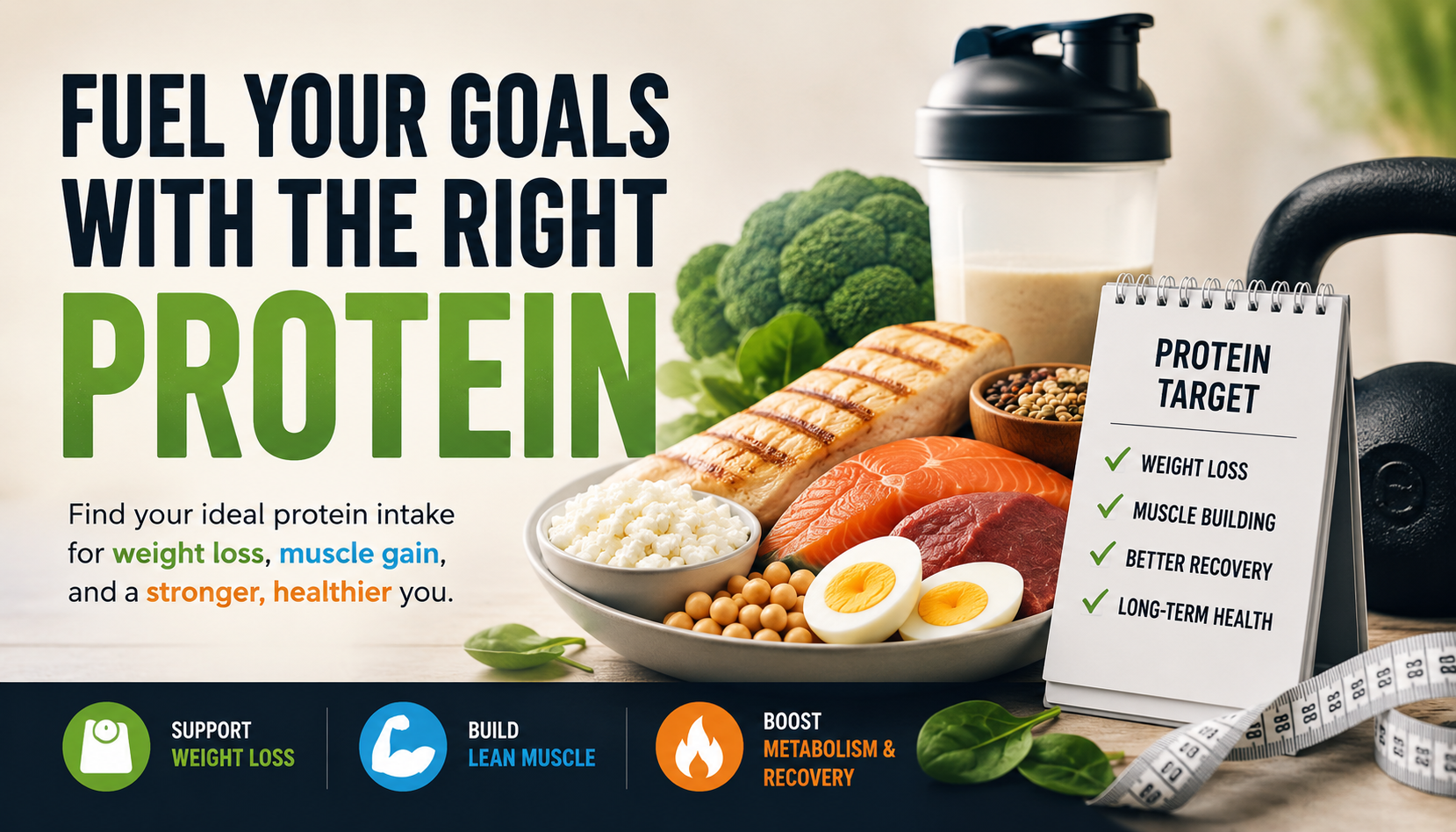
If you've ever typed "how much protein to build muscle" into a search bar, you already know the answer depends on who you ask. A protein calculator removes the guesswork by turning your body weight, activity level, and goal into a precise daily gram target. Whether you're trying to add muscle, preserve it while cutting calories, or simply eat in a way that keeps you full longer, understanding your personal protein number is one of the highest-leverage changes you can make to your nutrition plan.
Why Protein Intake Matters More Than You Think
Protein is the only macronutrient directly responsible for building and repairing muscle tissue, and most people underestimate how much of it they actually need. Unlike carbohydrates or fat, protein also carries a "thermic effect" that burns more calories during digestion, and it's the single most satiating macronutrient — meaning it keeps hunger at bay far longer than an equivalent amount of carbs. Getting your intake right isn't just a bodybuilding detail; it affects recovery, metabolism, and how sustainable your entire diet feels day to day.
The problem is that generic advice like "eat more protein" doesn't tell you anything actionable. Your ideal number depends on your current body weight, how much lean mass you're carrying, your training volume, and whether your goal is to gain, maintain, or lose weight. That's exactly the gap a protein calculator is built to close — it converts general science into a number specific to you.
How Much Protein to Build Muscle
Research on resistance-trained individuals consistently points to a range of roughly 0.7 to 1.0 grams of protein per pound of body weight (about 1.6–2.2 g/kg) for maximizing muscle protein synthesis. Going meaningfully above this range doesn't appear to accelerate muscle growth further for most lifters — the body can only use so much protein for tissue repair at once. The National Institutes of Health notes that individual needs vary with age, activity, and health status, which is exactly why a one-size-fits-all number falls short.
Bodyweight-Based Targets
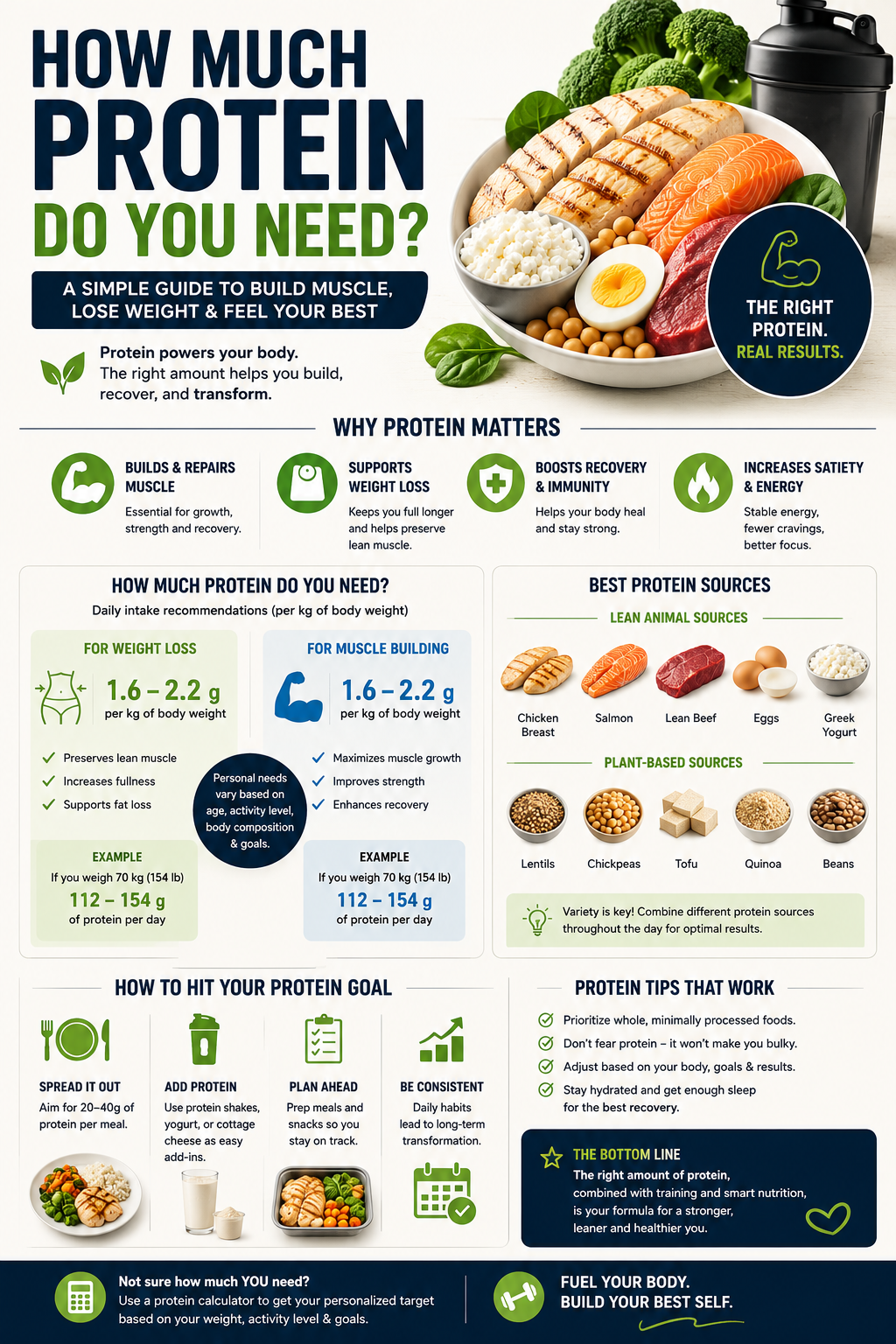
As a practical starting point: a 160 lb (72.5 kg) lifter aiming to build muscle would target roughly 112–160 grams of protein per day. A 200 lb (90.7 kg) lifter would land closer to 140–200 grams. These ranges assume regular resistance training two to five times per week — if you're mostly sedentary, the lower end of general population recommendations (around 0.36 g/lb) is typically sufficient.
Timing and Distribution
How you spread protein across the day matters almost as much as the total. Distributing intake into three to five meals, each containing 25–40 grams, appears to stimulate muscle protein synthesis more consistently than front- or back-loading most of your protein into one meal. This is one reason a saved, personalized target from a protein calculator is more useful than a vague daily goal — it gives you a number you can actually divide into meals.
Using a Protein Calculator for Weight Loss
Protein plays a different but equally important role when the goal is fat loss. During a calorie deficit, the body is more likely to break down muscle tissue for energy alongside fat — unless protein intake is kept high enough to signal the body to preserve lean mass. A protein calculator for weight loss typically recommends staying at or slightly above muscle-building ranges (0.7–1.0 g/lb) even while calories are reduced, precisely because protein needs increase, not decrease, during a deficit.
Higher protein intake during weight loss also helps counter one of the most common reasons diets fail: hunger. Because protein is more satiating per calorie than carbohydrates or fat, prioritizing it makes a calorie deficit feel less restrictive. Many people who struggle to stick with cutting phases find that simply hitting their protein number — rather than obsessing over every other macro — is the single change that makes the diet sustainable long term.
Protein Quality and Food Sources
Not all protein sources are equal. Complete proteins — those containing all nine essential amino acids in sufficient amounts — include eggs, poultry, fish, dairy, and soy. Plant-based eaters can still hit their targets by combining sources like beans, lentils, tofu, and whole grains throughout the day, since amino acid profiles don't need to be complete at every single meal, only across the day as a whole.
High-Protein vs. Standard Intake: A Quick Comparison
| Approach | Daily Protein | Best For |
|---|---|---|
| Standard (RDA baseline) | ~0.36 g/lb | Sedentary adults, general health |
| Weight Loss / Body Recomposition | 0.7 – 1.0 g/lb | Preserving muscle in a calorie deficit |
| Muscle Building | 0.7 – 1.0 g/lb | Resistance-trained individuals in a surplus or maintenance |
| Endurance Athletes | 0.5 – 0.7 g/lb | High training volume, lower resistance component |
Common Protein Mistakes to Avoid
The most frequent mistake isn't eating too little protein — it's inconsistency. Hitting your target on training days but falling far short on rest days undermines the cumulative effect that drives muscle retention and growth. Another common error is assuming more is always better; excess protein simply gets used for energy or stored, without added muscle benefit once you're already within an effective range. Tracking your intake against a calculated target, even loosely, closes both gaps.
For most healthy adults, protein intake within these ranges is well tolerated. The Dietary Guidelines for Americans frame protein as part of an overall balanced eating pattern rather than a nutrient to maximize in isolation — a helpful reminder that protein works best alongside adequate carbohydrates, fats, fiber, and overall calorie balance, not as a replacement for them.
Try FitMotif's Protein Calculator
Rather than relying on general ranges, FitMotif's protein calculator factors in your body weight, activity level, and goal — whether that's building muscle or losing weight while holding onto the muscle you already have — to generate a specific daily gram target in both US and metric units. Logged-in users can save their inputs and revisit their personalized number anytime their weight or goals change.
Frequently Asked Questions
How much protein do I need to build muscle?
Should I use a different protein calculator for weight loss?
Can I eat too much protein?
Do I need to hit my protein target every single day?
Can plant-based eaters hit high protein targets?
Conclusion
Whatever your goal, guessing at your protein intake leaves progress on the table. A protein calculator turns general research into a specific, personalized daily target — whether you're focused on how much protein to build muscle or need a protein calculator for weight loss that protects the muscle you've already built. Combine that number with consistent food choices and reasonable distribution across meals, and protein becomes one of the simplest, most reliable levers you have for reaching your fitness goals.